Markets · Economy 51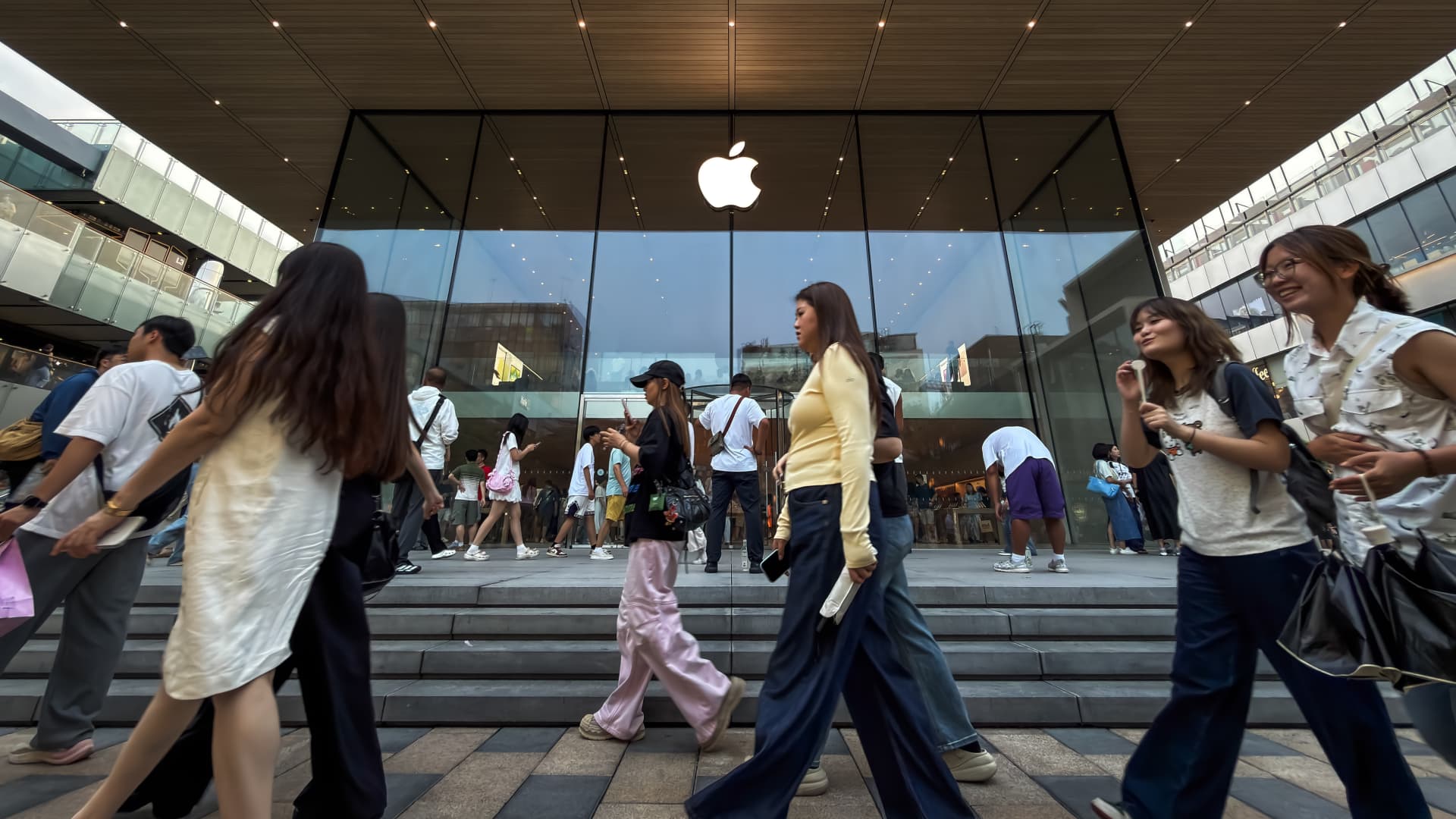
Pedestrians walk past an Apple Store at the Taikoo Li Sanlitun shopping complex in Beijing, China. China's consumer and wholesale inflation rebounded in August, as higher global commodity costs and surging high-tech demand cushioned persistently tepid domestic consumption.
The producer price index (PPI) increased by 3.8%, according to data released by the National Bureau of Statistics on August 22, 2026. This exceeded economists' forecast of a 3.6% gain and surpassed July's 3.5%, the weakest in three months. Much of the increase reflects a favorable base-effect comparison and higher commodity costs, rather than a genuine strengthening in household demand, which remains soft due to fading effects from Beijing's trade-in subsidies and other consumption-boosting measures.
Consumer prices rose by 0.8% in August from the previous year, matching economists' estimates in a Reuters poll, and accelerating from July's 0.5% gain. Core Consumer Price Index (CPI), excluding volatile food and energy prices, climbed 1% in August, up from a 0.9% gain in July. Dong Lijuan, chief statistician at the National Bureau of Statistics (NBS), attributed the inflation rebound to volatile global commodity prices, seasonal food price gains, and rising demand in high-tech industries.
Danske Bank revised its 2026 GDP growth forecast for China down to 4.6% from 4.8%, citing disappointing consumer data. The bank also trimmed its consumer-inflation forecast to 0.8% for the year. Allan von Mehren, chief China economist at Danske Bank, noted that China's domestic economy remains stuck in a slump, with a negative feedback loop of falling home prices, high savings, weak employment, and slow consumer spending. Until there is a moderate recovery in the housing market, household confidence is expected to remain low, keeping private consumption growth weak.
Economic momentum in China has slowed after a strong start to the year. Retail sales and urban investment weakened in July, adding pressure on Beijing to provide more support for the remainder of 2026. Additionally, the youth unemployment rate in urban areas climbed to 17.9% in July, the worst reading since August 2025. The Iran war has contributed to surging oil prices in recent months, further impacting inflation dynamics.
Source: CNBC